Nestlé Nutrition Online
Sector
Healthcare Education
Scope
- Strategy
- Research
- UX/UI
- Design System
Overview
Nestlé Nutrition Online exists to upskill nurses and doctors on Nestlé's nutritional range. The first version of the platform was live, but the audience it was built for wasn't engaging with it. The content was structured around Nestlé's product range, not around the moments in clinical practice where that knowledge gets used.
The problem
Nestlé needed healthcare professionals to understand its nutritional offerings well enough to recommend them with confidence. The existing platform had the content, but it read like a product catalogue with a learning interface bolted on. Nurses and doctors don't open a learning platform to browse a manufacturer's range. They open it when they have a specific question, mid-shift, between consults, with a patient already in front of them.
The harder problem underneath the brief was credibility. Anything that felt like sponsored content or product marketing in a clinical setting would lose the audience immediately. The platform had to earn the time of people who have very little of it, and it had to do that without dressing up promotion as education.
The approach
We started with the audience rather than the catalogue. Through research with practising nurses and doctors, we mapped the clinical scenarios where nutritional knowledge actually surfaces: paediatric feeding consults, allergy management, post-operative recovery, the conversations that happen with parents and patients in the room. Those scenarios became the spine of the product strategy.
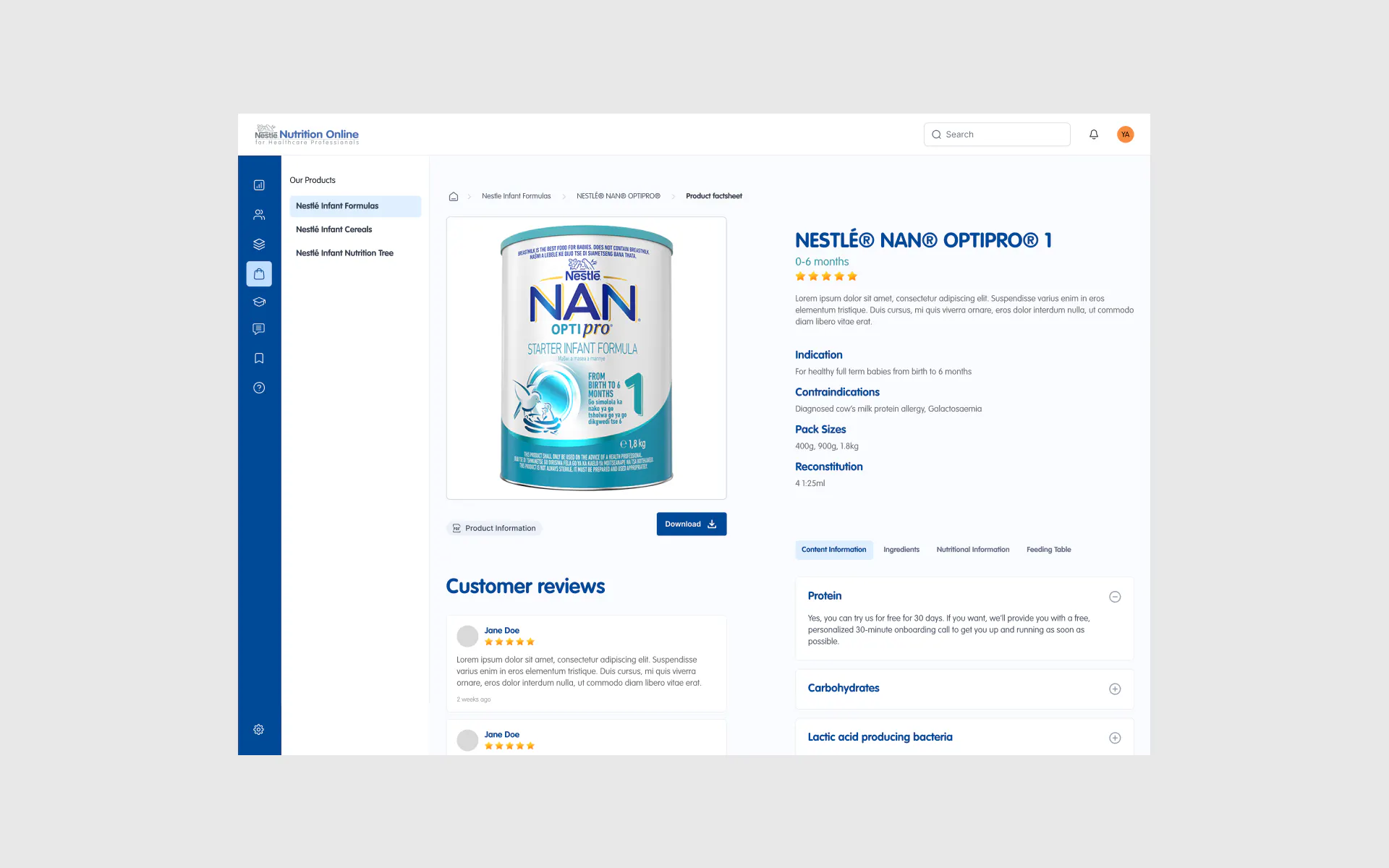
The content was then resequenced. Where the previous platform indexed knowledge by Nestlé's product structure, the rebuilt experience indexed it by the situations clinicians find themselves in. Products still appear, but they appear inside the scenario where they are clinically relevant, not at the front of a category they are being sold under.
The work
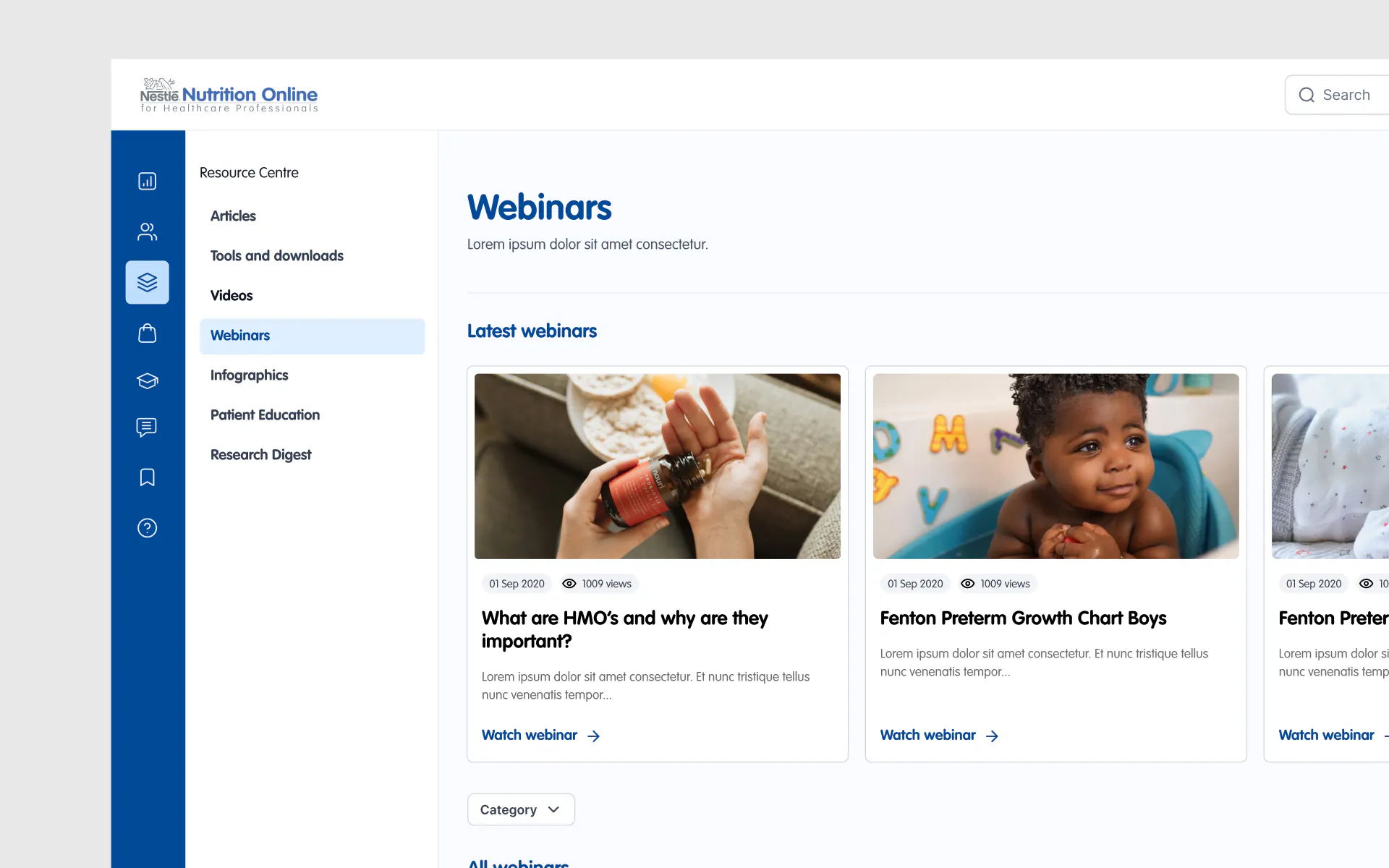
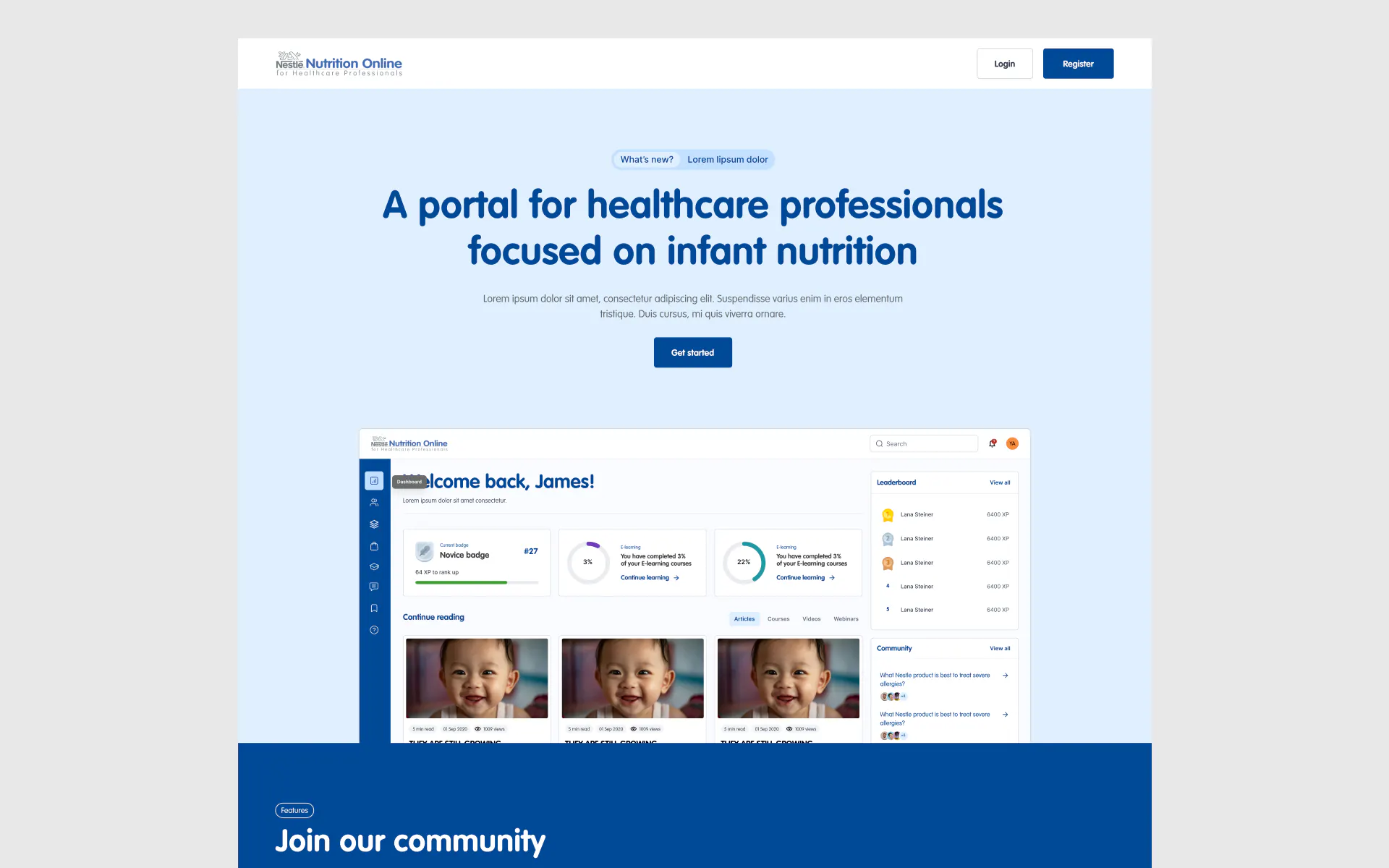
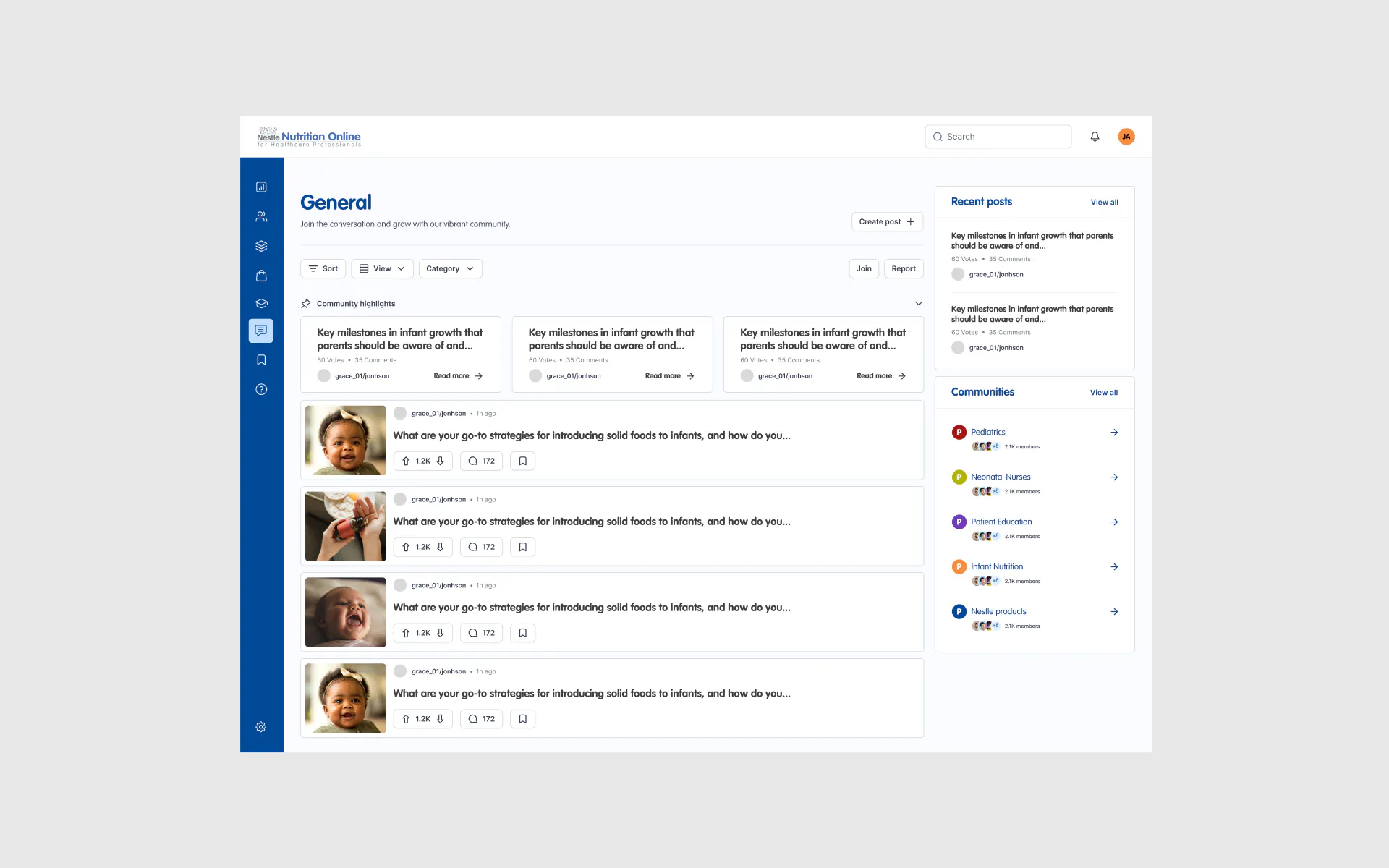
The interface was designed to make the platform feel like a professional resource rather than a marketing channel. Restraint did most of the work. Clean information density, clinical typography, and the kind of structure healthcare professionals already trust from the journals and reference tools they use elsewhere.
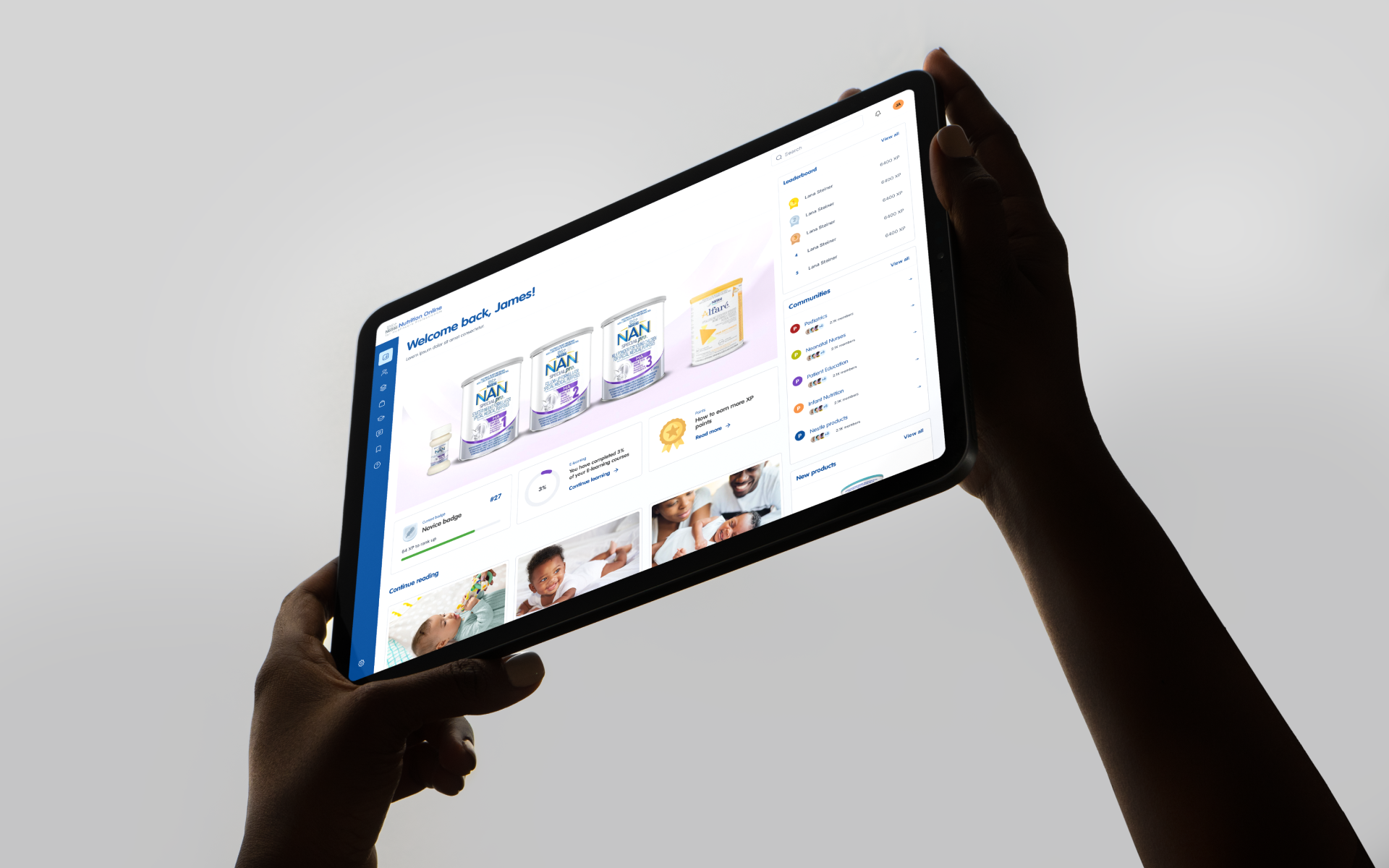
Engagement features were introduced carefully. Progress tracking, gamified completion, and community interaction were built in to support ongoing learning, but tuned to the audience. The visual language is closer to professional certification than consumer learning, and the engagement mechanics were designed to recognise effort and expertise rather than reward casual participation.
A design system underpins the platform so that new content, new modules, and new markets can be added without the experience drifting back toward the catalogue it started as.
The outcome
The strongest signal at this stage is internal. The strategy reframed how Nestlé's healthcare team thinks about the platform, away from a content destination for products and toward a continuing professional development resource for clinicians. That shift secured stakeholder alignment across teams that had previously been working from different definitions of what the platform was for.
The platform is now positioned to be measured against the right metric, which is whether nurses and doctors return to it as part of their practice, not whether they completed a module on a product page.